Pull-ups for women: how to do your first one
Women can learn a pull-up with the same plan as anyone: hang, hold the top, lower slowly, then pull. Women gain relative upper-body strength at least as fast as men; most start further back, so it takes a few weeks longer. In Overbar’s forecast, a woman starting from zero needs about five to eight months.
By Aleksandr Chichkanov, maker of Overbar · Updated October 27, 2026
Can women do pull-ups?
Yes. In training studies, women gain relative upper-body strength at least as fast as men (Roberts 2020). What differs is the starting point: in one study of college students, women’s best single pull-up averaged 0.73 times their body weight and men’s 1.16 (Johnson 2009). So the average woman has further to go, and builds at the same pace. The gap is where you start, not how far you can go.
Where did “women can’t do pull-ups” come from?
From news stories in 2012 about a University of Dayton study (“Even fit women can’t do pull-ups, study finds”, the Globe and Mail). In a 12-week program for college women who couldn’t do a pull-up, training three times a week, 4 of 17 could do one by the end, and their strength rose about 36% (Flanagan 2003). The study shows that 12 weeks wasn’t enough for most of those women. It doesn’t show that women can’t.
The US Marines saw the same thing at scale. In 2013, 55% of female recruits couldn’t do three pull-ups at the end of boot camp, and the Corps delayed the requirement (Military.com). When pull-ups were later added to women’s fitness test, upper-limb injuries didn’t rise; the trend kept falling (Arnold 2026).
How long does it take a woman to do a pull-up?
In Overbar’s forecast, at three 15-minute sessions a week with a bar:
| Where you start | Estimate |
|---|---|
| Can’t hang 10 seconds, no push-ups | about 33 weeks (20–53) |
| Hang 10–29 seconds, 1–5 push-ups | about 27 weeks (16–51) |
| Hang 30–60 seconds, 6–15 push-ups | about 22 weeks (14–43) |
| Can lower yourself slowly from the top | about 12 weeks (8–22) |
A fourth day a week, bands or a gym’s assisted machine each take a few weeks off. Your own estimate, with your answers: the first pull-up calculator. More on what moves it: how long it takes to do a pull-up.
Is there a pull-up program for women?
The best one is the same as for anyone, started where you are. Strength builds the same way and at the same pace, so the moves don’t change; only where you start does.
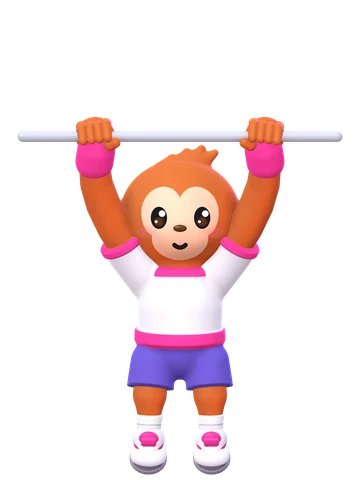
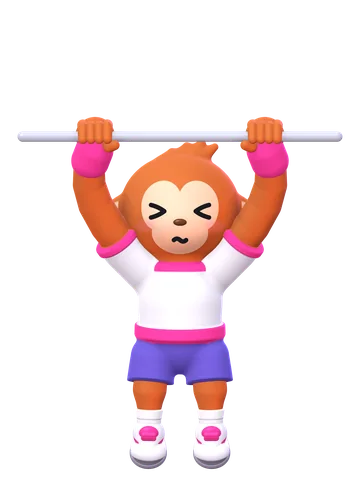
- Hang until you can hold on for 30 seconds, with hanging shrugs and rows alongside.
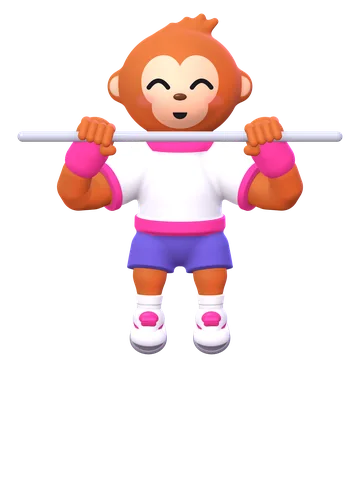
- Hold the top from a box: chin over the bar, elbows in, 15 seconds. Then halfway, at 90°.
- Lower slowly from the top, 3–5 seconds, then 8–10. Lowering builds more strength than lifting (Roig 2009).
- Pull, fresh, at the start of a session, once you can lower for 10 seconds and hold the top for 30.
Train two to four short sessions a week: more sessions build more strength through more total work, and the effect showed in women too (Grgic 2018). The full plan, with doses and a sample week: how to do your first pull-up.
A few things that help
- Bands or an assisted machine, with the help coming off in small steps, let you practise the whole movement early.
- Grip at shoulder width, overhand, for the goal rep. In a small study, very wide grips moved the shoulder in ways linked to impingement (Prinold & Bull 2016).
- Chin-ups are fine to train. Palms facing you works the same muscles overall, with more biceps (Youdas 2010).
- Stop each set with a rep or two left, and test your hang, hold and lower every two weeks.
- Expect months, not weeks. It’s not a sign you’re doing it wrong.
Overbar gives general fitness guidance, not medical advice. If you’re pregnant or recently gave birth, or you’ve had a shoulder, elbow, neck or wrist injury or surgery, talk to a doctor or physiotherapist before you start. Burning muscles and next-day soreness are normal; sharp or joint pain isn’t: stop.
Questions
Can women do pull-ups?
Yes. Women gain relative upper-body strength at least as fast as men in training studies. Most start with less upper-body strength relative to body weight, so the first pull-up takes a few weeks longer, with the same plan.
Why is it harder for women to do a pull-up?
On average, women start with less upper-body strength relative to their body weight: in one study, women’s best single pull-up averaged 0.73 of their body weight and men’s 1.16. That’s the starting point, not a limit.
How long does it take a woman to do her first pull-up?
For a woman starting from zero, about five to eight months at three short sessions a week, in Overbar’s forecast. If you can already lower yourself slowly from the top, about three months.
Do women need a different pull-up program?
No. Strength builds the same way and at the same pace, so the moves are the same: hangs, top holds, slow lowers, then the pull. What changes is where you start.
Are chin-ups easier than pull-ups for women?
They’re close, for women and men alike. Both work the same muscles overall, and the chin-up uses more biceps, so chin-ups are a good training variation on the way.
Can I train for a pull-up while pregnant or after having a baby?
Talk to a doctor or physiotherapist first. Overbar’s plan is general fitness guidance, not medical advice.
Built for your very first pull-up.
Overbar measures where you start on Day 1 and builds the plan from there, the same plan for everyone, at your pace. Day 1 and Quick Hangs are free; Pro is $49.99 a year with a free week, or $5.99 a week.
Download on the App Store